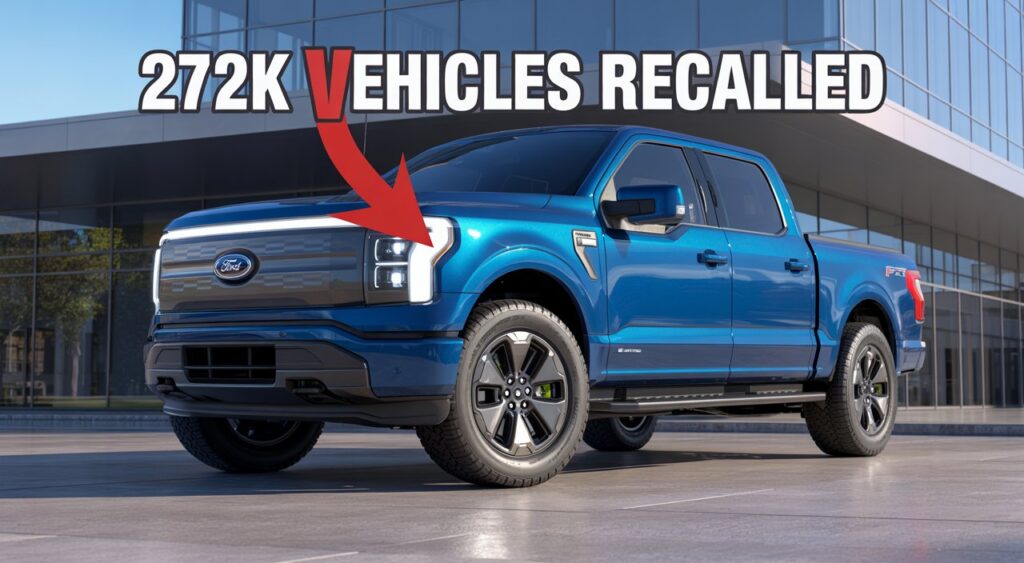
Your truck rolling away in a parking lot shouldn’t be a valid fear in 2025, yet Ford just recalled 272,645 electric and hybrid vehicles for exactly that scenario. The culprit? A faulty integrated park module that might fail to fully lock your transmission into park, turning your F-150 Lightning into an expensive runaway shopping cart.
The Technical Breakdown
Hardware meets software in the worst possible way, creating rollaway risk when systems fail.
The problem lives in Ford’s integrated park module, a component that sounds more complicated than it actually is. When you shift into park, this module should lock your transmission using a pawl mechanism—think of it as a metal finger that grabs onto gear teeth to hold everything in place.
But in affected vehicles, that pawl can bind against the slider mechanism, preventing the full lock. You’ll know something’s wrong when your dashboard shows:
- A wrench light
- A “shift fault” message
- No illuminated park indicator
It’s like your car’s way of saying “I’m not actually parked, despite what you think.”
Which Vehicles Are Affected
The recall spans Ford’s most popular electric models across multiple model years.
The recall hits Ford’s EV poster children hardest:
- 2022-2026 F-150 Lightning trucks
- 2024-2026 Mustang Mach-E crossovers
- 2025-2026 Maverick hybrids
If you’re driving one of these and thinking “this sounds familiar,” you’re not imagining things—Ford’s recall volume has surged in 2025, making this feel like a greatest hits album nobody asked for.
The Silver Lining Fix
Over-the-air updates offer convenience, but only if Ford’s software solution actually works.
Here’s where Ford’s EV strategy shows its advantages: the fix comes through an over-the-air software update, meaning no dealer visits or scheduling headaches. If your vehicle can’t receive OTA updates, dealers will handle the software installation for free. No accidents or injuries have been reported yet, according to NHTSA documents, which suggests Ford caught this before disaster struck.
Starting February 2, 2026, affected owners will receive notification letters with instructions. You can check your vehicle’s status now using your VIN on NHTSA.gov or Ford’s recall website. Ford’s customer service line (1-866-436-7332) can also verify if your vehicle needs the update. Consider this your reminder that even cutting-edge EVs sometimes need old-fashioned recalls to keep wheels from rolling where they shouldn’t.
Last modified: December 23, 2025
About the Author: Eric L.