Menswear studio Benjamin Barker is not just selling clothes, but an entire feeling
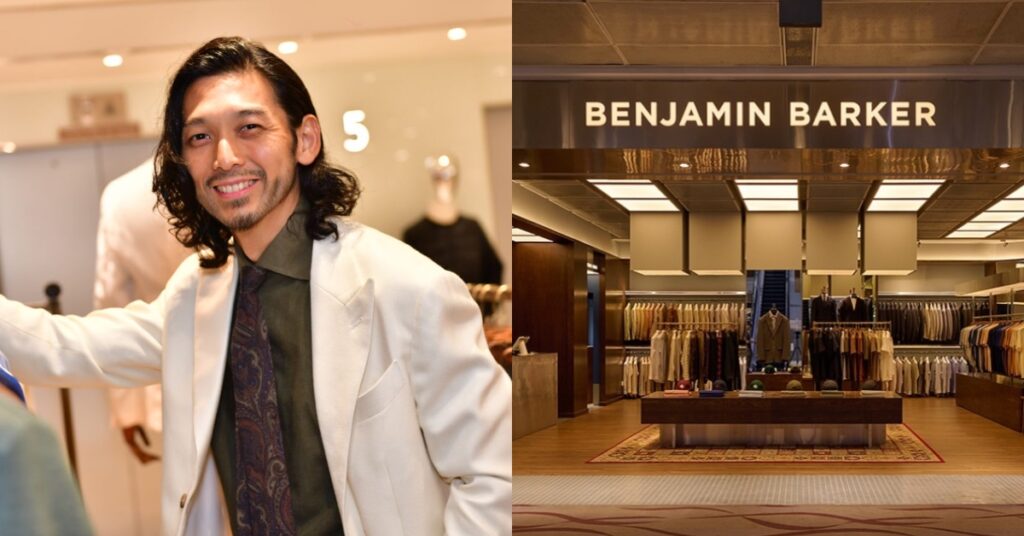
If Nelson Yap could describe Benjamin Barker in one phrase, it would be this: “to live greatly with grace.” It’s less a tagline than a lens—one that shapes how he designs clothes, builds spaces, and imagines what a modern men’s lifestyle brand should feel like in 2025.
And that philosophy becomes obvious the second you step into any Benjamin Barker space.
Each store is meticulously designed with a warm, retro-chic atmosphere, curated music, and subtle scents that remind you of a boutique hotel lobby rather than a typical retail space.
Some stores take the experience even further: vinyl records and speakers mingle with carefully curated collections of clothing, furniture, and rugs, while the Benjamin Barker Recreational Club (BBRC) at Cineleisure adds a cafe and a dedicated culture corner, turning shopping into a full-bodied, multi-sensory ritual.
This is the core of Benjamin Barker’s evolution: They’ve moved beyond just selling clothes, and have curated a lifestyle the brand invites you to step into. Yap is selling what it feels like to be the kind of man who wears Benjamin Barker.
A strategy that matters more than ever

Benjamin Barker began in 2009 with a simple mission: to fill the gap in affordable menswear by offering great quality and great fit.
Back then, the menswear landscape was starkly divided—on one end, inaccessible luxury; on the other, disposable fast fashion. Yap wanted Benjamin Barker to sit in the middle, offering men clothing that felt premium without the intimidating price tag.
But today, that mission has clearly evolved. “We’re not just making products—[we’re] building spaces, communities, and experiences that empower men to show up as their best selves,” said Yap.

Non-fashion ventures like the BBRC cafe and multi-level flagship stores act as “brand amplifiers,” Yap explains. They deepen emotional connection, extend dwell time, and let customers engage with the brand using all their senses.
It’s a strategy that matters more than ever. With Singapore’s men’s lifestyle and menswear market increasingly crowded, standing out requires more than just well-cut suits.
And Yap’s approach seems to have resonated: local expansion milestones have been hit, with Benjamin Barker now operating 17 stores across Singapore, and like-for-like sales growth remaining strong, he shared.
Taking the risky step to enter digital assets and Web3
A lot of brands pivot when times change. But for Yap, each move must have purpose. “We are still learning along the way,” he admitted. “Not every move will be right, but remaining still is worse. We try to take small, measured steps and, most importantly, stay sensitive and relevant to the times.”
And that sometimes means taking risks, like the brand did with BBRC Studios, Benjamin Barker’s creative lab exploring digital assets and Web3.

“It was never meant to be a crypto play,” Yap clarified. Its mission was storytelling, community, and global connection. Yet, as the Web3 landscape shifted and audience motivations diverged, the studio eventually closed in 2024.
“The experience taught us a lot about digital identity and how people engage online—lessons that still inform how we approach our digital strategy today.”
That doesn’t mean that Benjamin Barker is ruling out Web3 entirely, though. “I think it still has potential down the road, when it gains more credibility and, ironically, governance,” he said.
Particularly in areas like digital identity and ownership, he sees promise, though mass adoption will take time. For now, the brand is watching the space with “cautious optimism.”
Doubling its global footprint

With a solid foundation in Singapore, Yap shared that the brand is now poised for international growth, and with that comes a heavier focus on building its online presence and connecting with audiences across borders.
“In the early years, our audience was primarily local, so we were intentional about keeping marketing spend lean and did not prioritise social media as heavily,” he explained. “As we enter new markets, however, we see value in taking a more active approach to digital and social engagement to support our global ambitions.”
Currently, Benjamin Barker operates 30 stores across seven markets, with ambitious plans to double its global footprint to 60–70 stores, all while maintaining profitability and building a brand that endures. Yap sees Greater China as a particularly promising market, describing it as a region with immense cultural influence and strong consumer appetite, offering significant growth potential for the brand.

But international expansion isn’t just about opening stores—it’s about recreating the full Benjamin Barker experience across diverse markets. This brings a unique set of challenges, particularly when navigating complexity across cultures.
To manage this, the brand relies on strong partnerships and a codified brand DNA. Close collaboration with local partners is key, with detailed data and reporting maintaining accountability while trusting these partners to understand their markets best.
At the same time, every store design is carefully unified, directed, and approved by the central team, ensuring that each location reflects the brand’s identity while accommodating local cultural nuances.
With these strategies in place, Benjamin Barker ensures that each new store delivers the same multi-sensory, community-driven experience that has defined the brand from the start.
Pushing the boundaries of retail
Looking ahead, Yap will continue to push the boundaries of what menswear retail can be.
“Cookie-cutter retail stores will not cut it anymore,” he shared, adding that in a world saturated with digital entertainment, experiences need to be memorable.
Yap’s ultimate ambition—and a bold one at that—is to move into hospitality with a Benjamin Barker boutique hotel, where design, lifestyle, and storytelling converge to fully immerse visitors.
“It’s still a dream—a moonshot. But it’s a natural extension of our ethos: space, taste, sound, and storytelling. A place where one can fully immerse in the Benjamin Barker experience.”
- Read other articles we’ve written on Singaporean businesses here.
Also Read: Menswear, F&B, NFTs: Benjamin Barker founder on making his biz profitable or risk being bankrupt
Featured Image Credit: Benjamin Barker/ @offvices via Instagram
Last modified: December 4, 2025